
In short
Large ships have stabilisers, and in calm seas most people feel almost nothing. If you are sensitive: choose a calm region and season, take a cabin in the middle of the ship on a lower deck, look at the horizon and get fresh air when the sea is rough, and ask a pharmacist or doctor before the trip which remedy suits you.
Why it happens and who gets it
Seasickness starts when your eyes and your inner ear disagree: inside, the cabin looks still, while your sense of balance feels the movement. Typical signs are tiredness, yawning, a headache, paleness and nausea.
- Most people adapt within the first one or two days at sea.
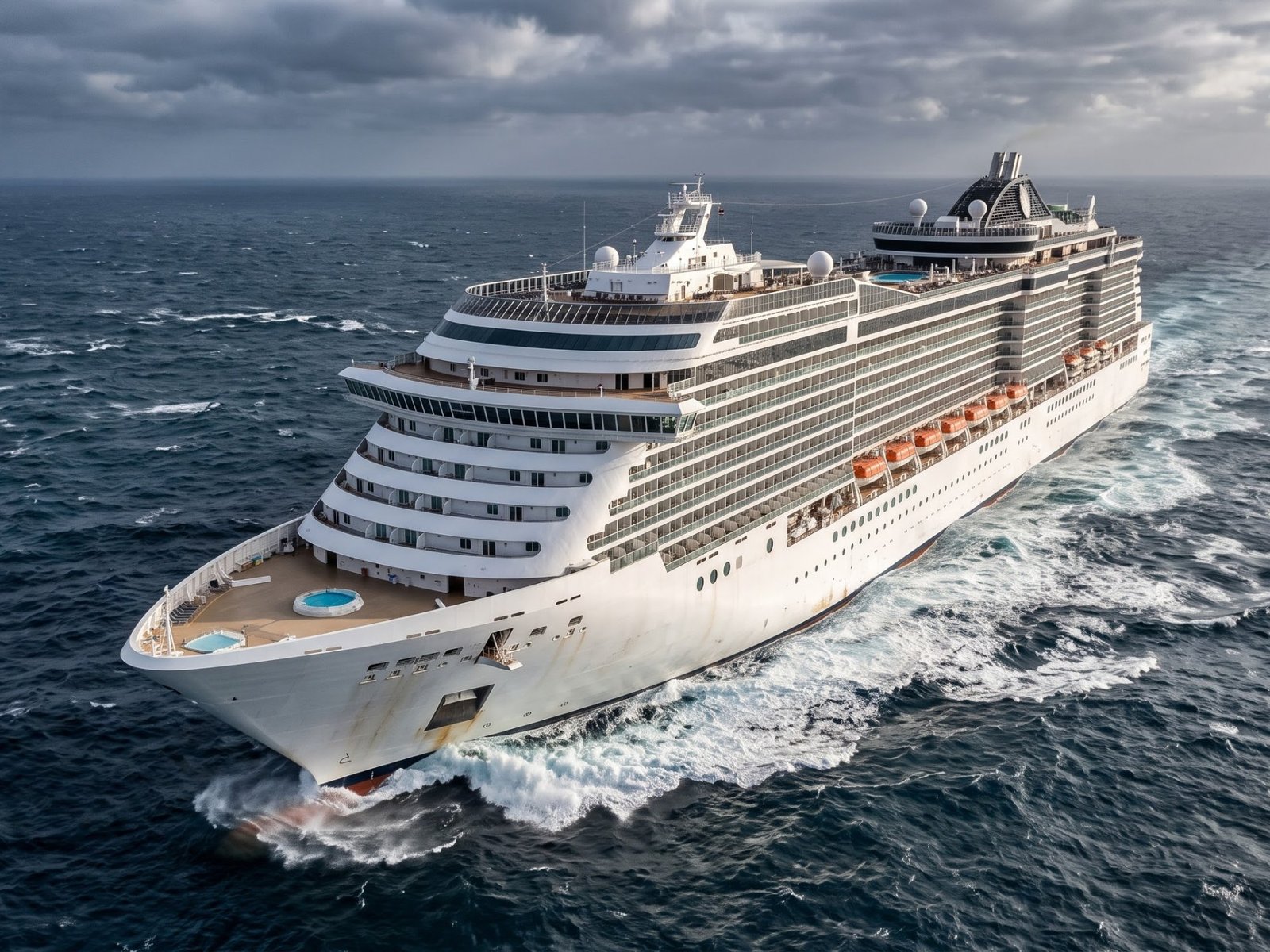
- Large ships move less than ferries or small boats, and stabilisers reduce the rolling.
- You feel it most at the front (bow) and on the high decks; least in the middle of the ship, low down.
- If you get carsick or airsick, plan ahead: route, season and cabin matter more for you.
Where and when the sea is usually calmer
| Usually calmer | Often more motion |
|---|---|
| Mediterranean from May to September | Bay of Biscay, especially outside summer |
| Caribbean in the dry season (December to April) | North Sea and English Channel in autumn and winter |
| Inside the Norwegian fjords | Ocean crossings: transatlantic, the North Atlantic to Iceland |
| Baltic Sea in summer | Drake Passage and Cape Horn; the open coast of Norway in winter |
| River cruises — almost no motion | Mediterranean in winter, when strong winds such as the mistral blow |
This is a general picture: even a calm sea can have a windy day, and a "rough" area can be smooth. For your own dates, check our sea forecast along your route — it shows the expected waves day by day.
Which cabin to choose
- Middle of the ship (midship) moves least — like the centre of a seesaw.
- A lower deck moves less than a high one.
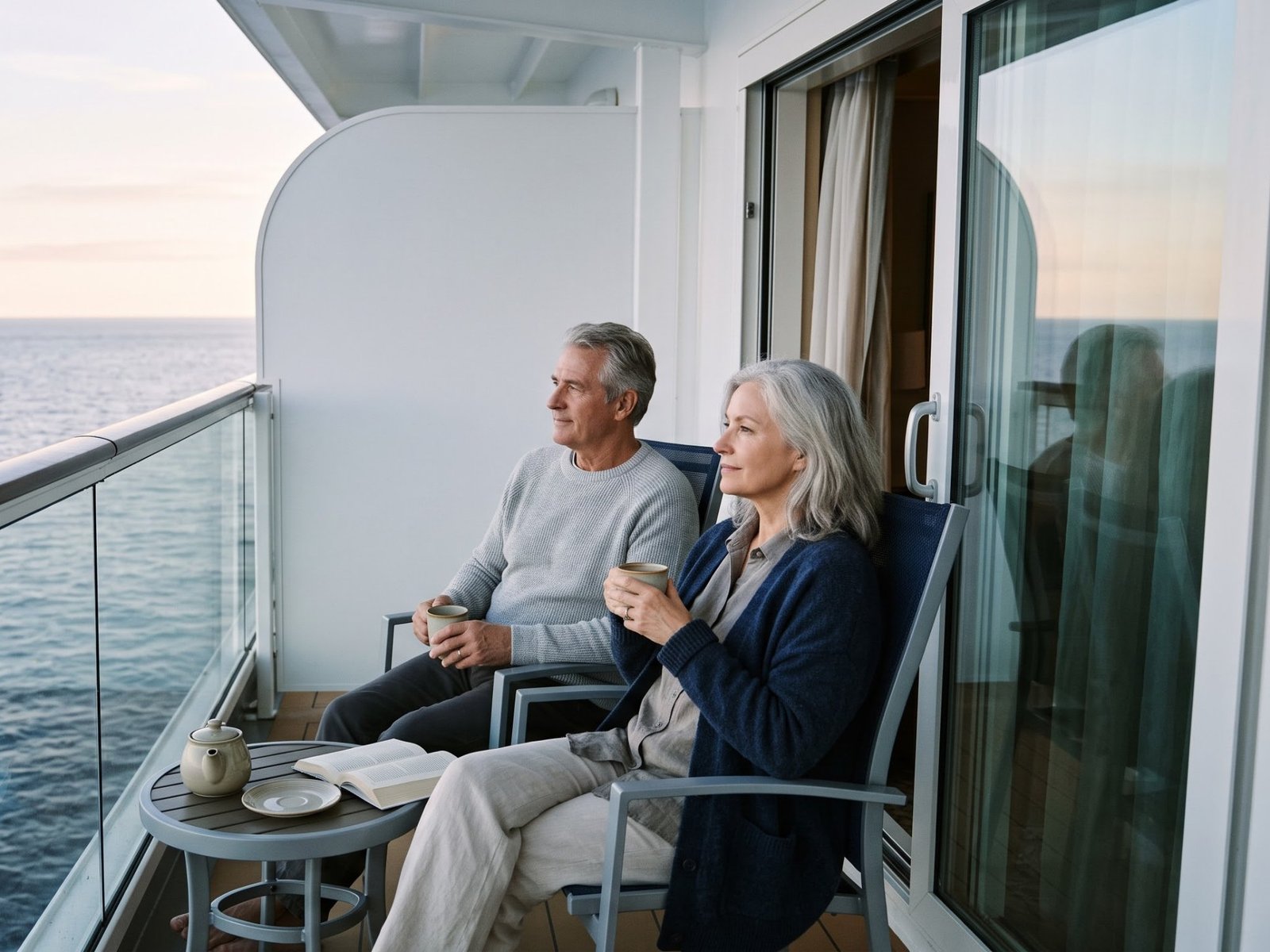
- A window or balcony helps: you can see the horizon and get fresh air.
- Avoid the very front and, if you are sensitive, the highest decks at the back.
More about locations and cabin types in our guide to choosing a cabin.
When the sea is rough: what to do on board
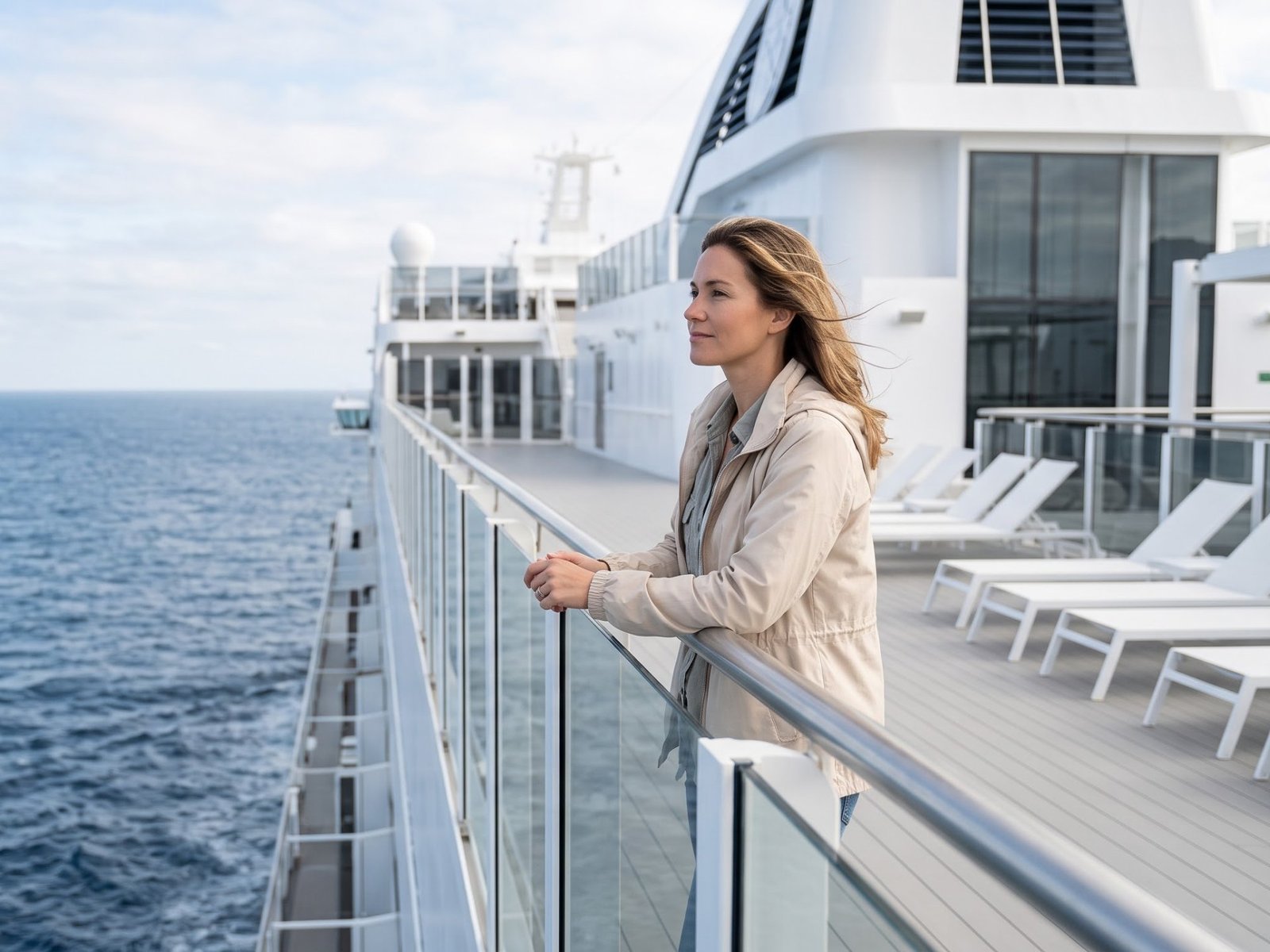
- Go outside and look at the horizon. Fresh air and a fixed line on the horizon help your balance settle.
- Move to the middle of the ship, low down — a lounge or the atrium on a lower deck.
- Lie down and close your eyes if you feel unwell; sleep helps.
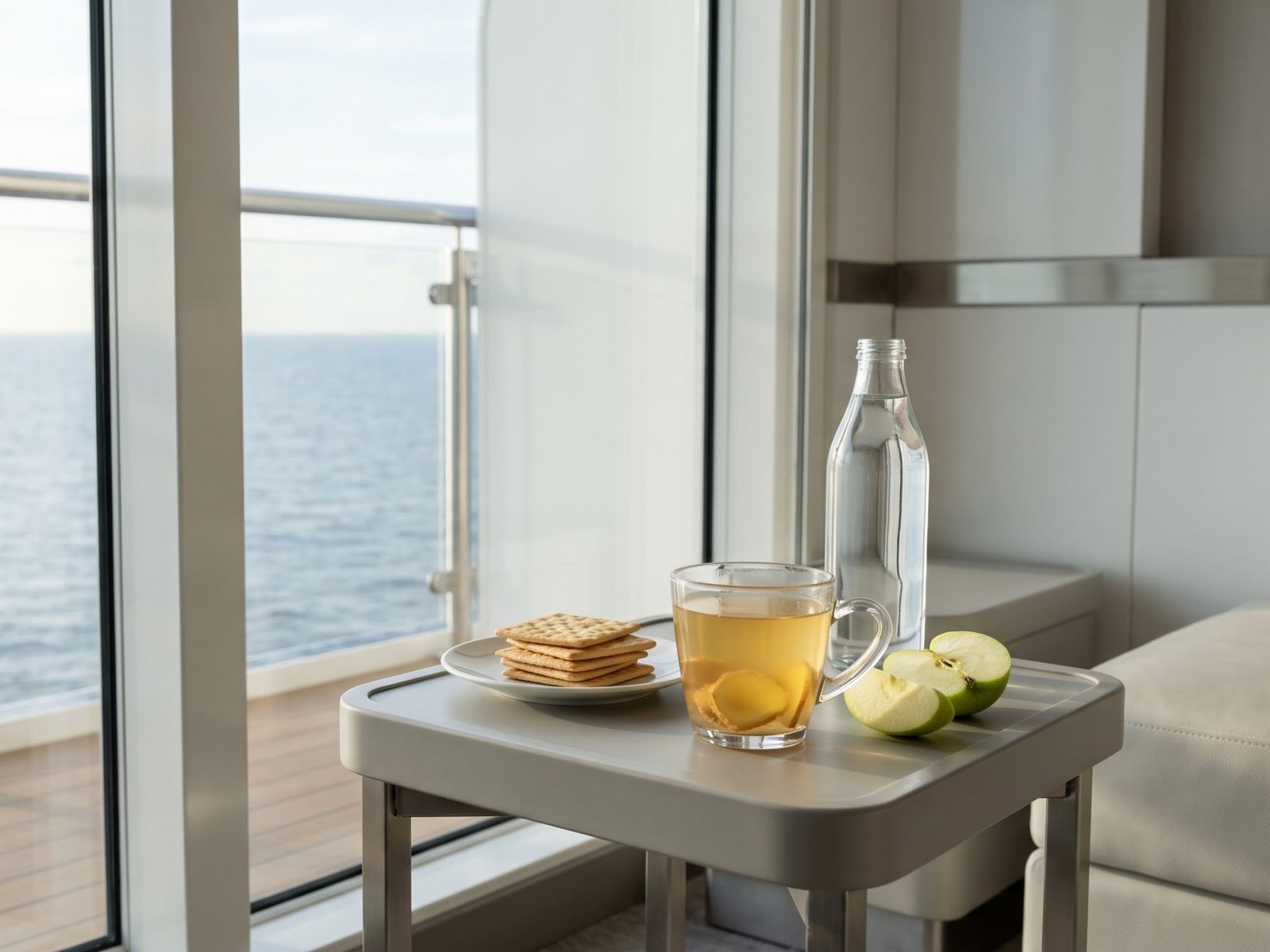
- Eat a little and simply: dry crackers, bread, an apple. An empty stomach makes it worse, and so do heavy, fatty meals.
- Drink water in small sips and go easy on alcohol.
- Put the phone and book away for a while: reading in a moving room is the hardest for your balance.
Remedies: what to discuss with a pharmacist or doctor
- Tablets against motion sickness are sold in pharmacies in many countries. They usually work best when taken before the sea gets rough. Some make you drowsy.
- Patches behind the ear are available on prescription in many countries.
- Ginger (tea, sweets, capsules) is a mild option that many people like to try.
- Acupressure wristbands — the evidence is mixed, but some travellers find them helpful.
- The ship's medical centre has remedies and can help if you feel very unwell; it is usually charged to your on-board account.
This is not medical advice. For children, during pregnancy, with long-term conditions or other medicines, choose a remedy only together with a doctor or pharmacist and follow the leaflet.
Common questions
Do you feel the motion on a large cruise ship?
In calm weather hardly at all. In wind and swell you feel a slow rolling, mostly at the front and on the high decks. Stabilisers reduce it noticeably.
Does seasickness pass after the first day?
For most people, yes: the body gets used to the motion within one or two days. Some feel a slight "rocking" on land after the cruise — it also passes.
When is the Mediterranean calmest?
Usually from May to September. In autumn and winter there are more windy days, especially in the western part and the Gulf of Lion.
Can I get seasickness remedies on board?
Yes, at the medical centre and sometimes at the shop or reception. It is cheaper and calmer to discuss a remedy with your pharmacist at home and bring it with you.
Do river cruises rock?
Practically not. A river ship sails on calm water, so a river cruise is a good choice for people who are very sensitive.
How the club fits in
In the club's search you see the route, the ship and the dates of each cruise, so you can pick a calmer region and season and choose your cabin location when you book. Not every cruise line can be booked through the club: check the specific sailing. More about booking with points.
General information, not medical advice. Sea conditions depend on the weather and differ every day; regions and seasons are a general guide. Before taking any remedy, consult a doctor or pharmacist. Reislite is an independent information site run by partners, not a website of inCruises.