
The short answer: choose the type for how you will use the cabin, then the location. For the least motion, pick a cabin in the middle of the ship on a lower deck. Check the deck plan for what is directly above and below — a pool deck, a theatre or a night club can mean noise. A balcony is worth it on scenic routes; on a busy port-heavy cruise, an inside cabin is often enough.
The four main types
| Type | What you get | Good for | Keep in mind |
|---|---|---|---|
| Inside | No window; usually the most affordable category | People who spend the day on deck and ashore; sleeping in a fully dark room | Hard to tell day from night; can feel small for a long cruise |
| Ocean view | A window or porthole that does not open | Daylight and a view without the cost of a balcony | Some have a view blocked by lifeboats — marked "obstructed" or "partial view" |
| Balcony | A private outdoor space with a door to the sea | Scenic routes such as fjords and Alaska, longer cruises, quiet mornings | Balconies on lower decks can be overlooked from above; some are partly shaded or smaller |
| Suite | More space, often a separate living area and extra services | Special trips, families who want space, people who value privacy | On some lines suites form a separate area of the ship with its own restaurant and deck |
Some ships also have single cabins for one person — see cruising on your own — and accessible cabins, see cruising with limited mobility.
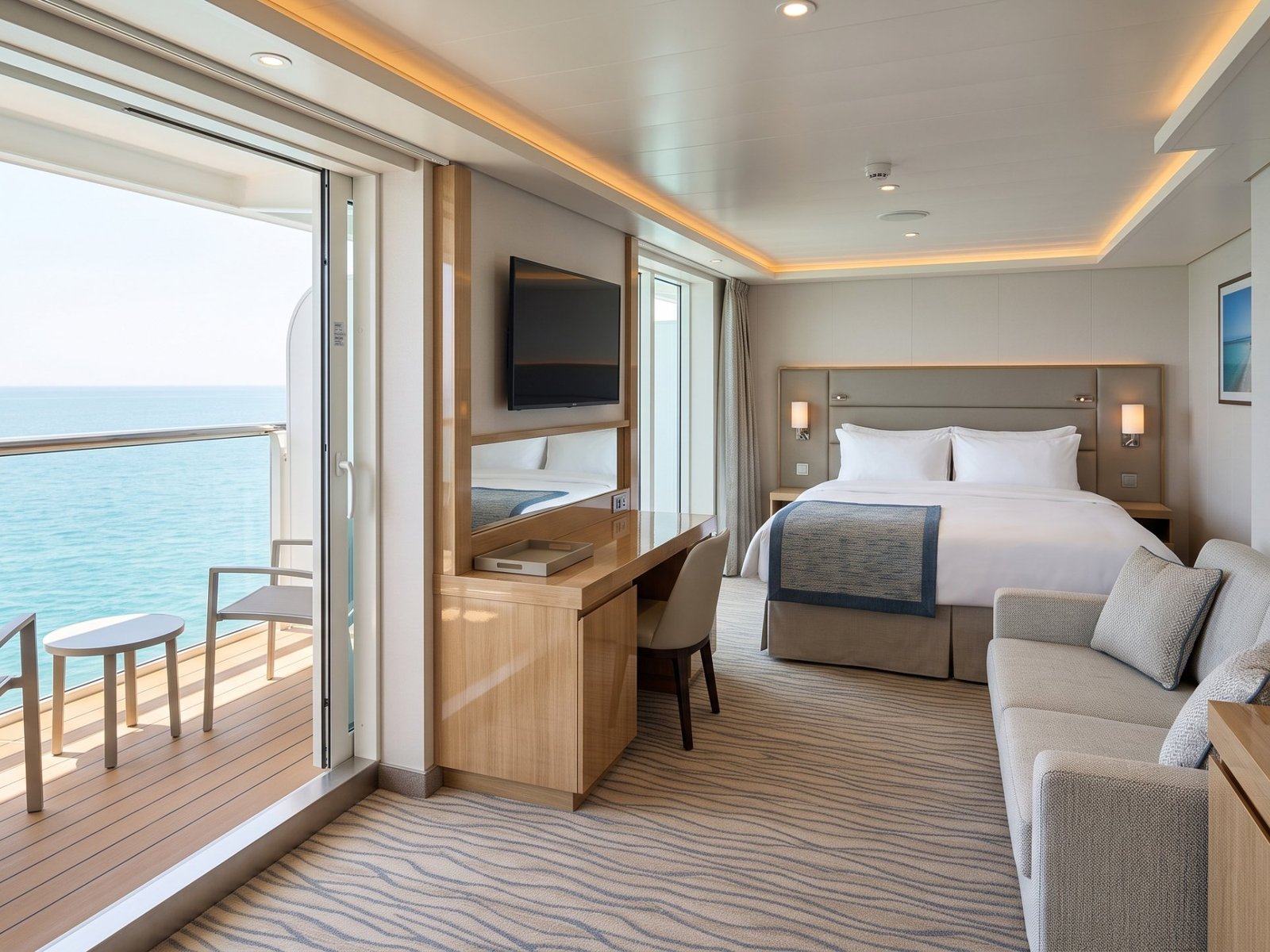
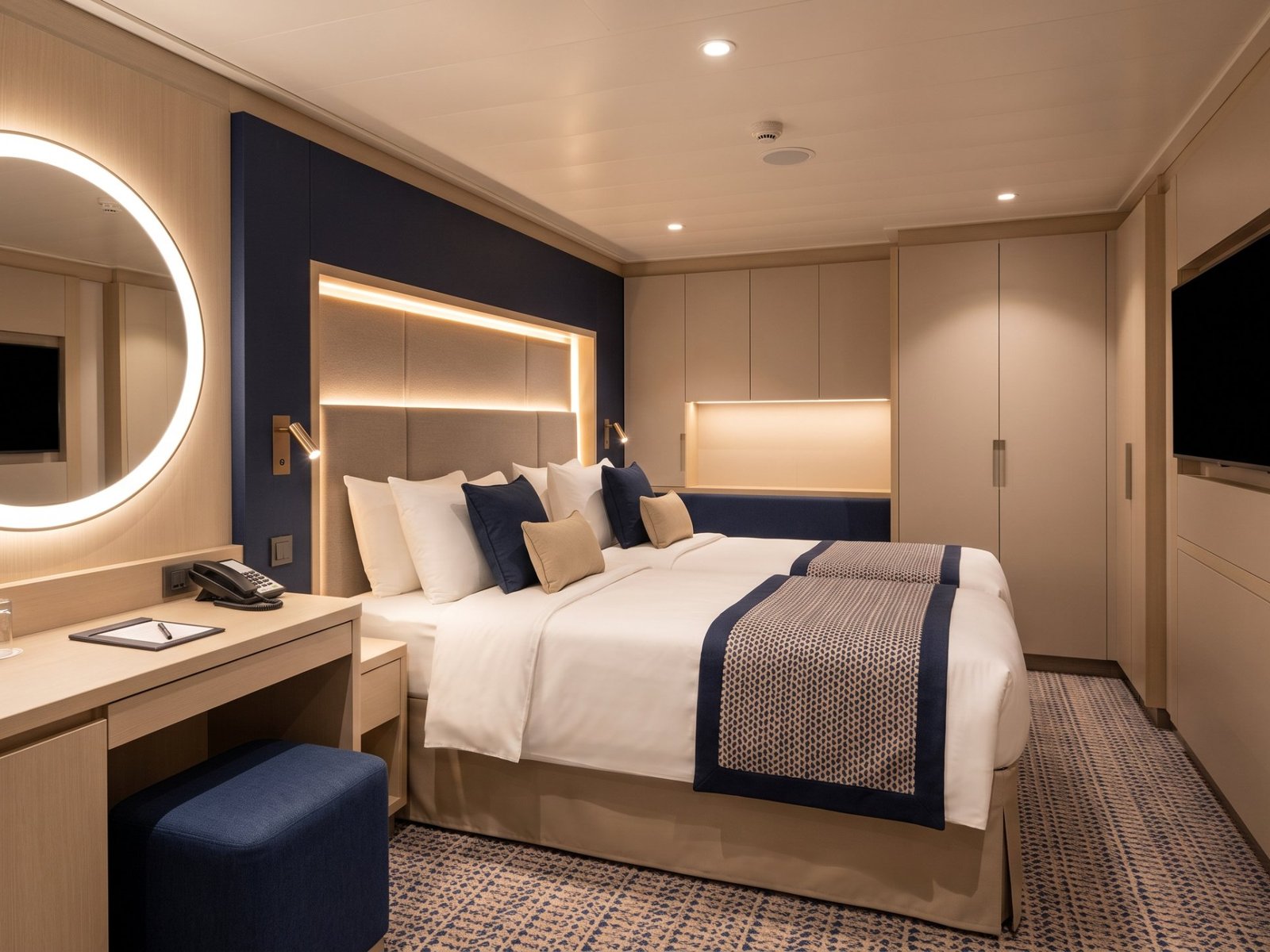
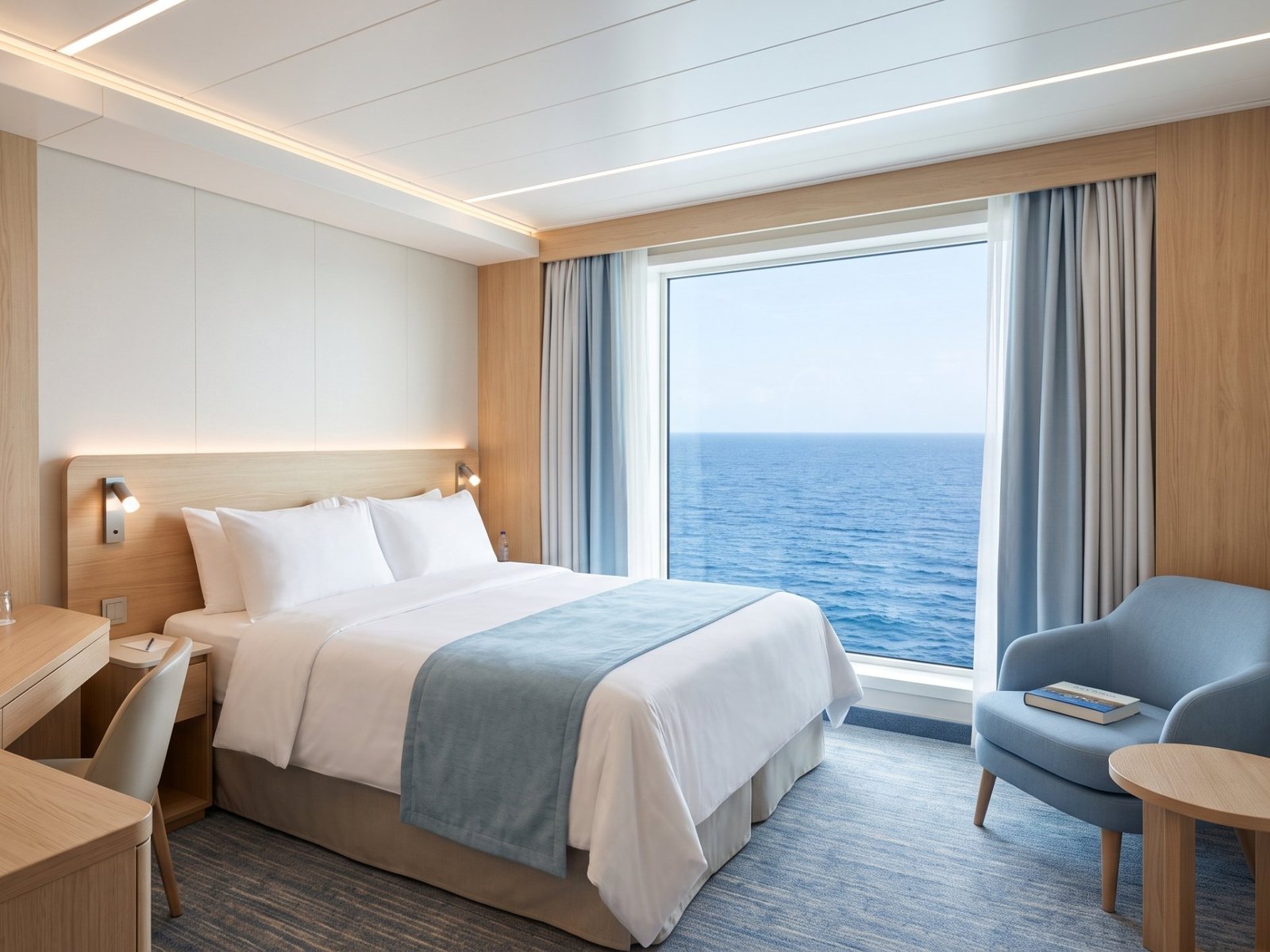
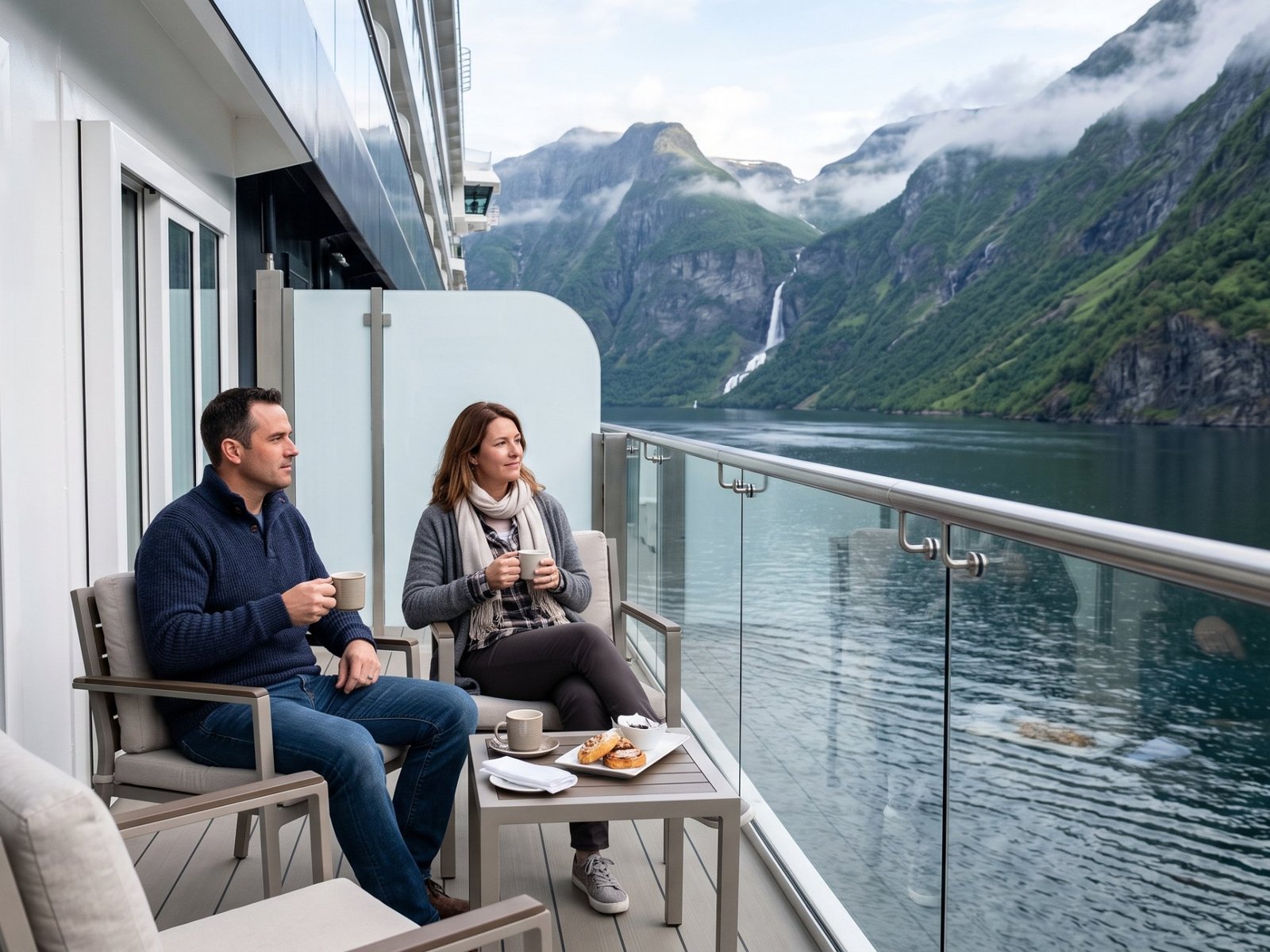
Where on the ship
- Middle of the ship, lower deck: you feel the least motion. The best choice if you are worried about seasickness.
- Front (forward): you feel the most movement in waves. Near the bow you may hear the anchor chain in ports where the ship anchors.
- Back (aft): some aft cabins have balconies with a view of the wake. You may feel some vibration from the engines.
- High decks: closer to pools and restaurants, but you feel the ship's sway a little more than lower down.
- Close to the lifts: fewer steps every day, especially useful on large ships; but the lift lobby can be busy.
Check what is above, below and next to you
This is the step most people skip. Open the deck plan for your ship and look at the decks directly above and below your cabin.
| Above or below you | What it can mean |
|---|---|
| Pool deck or buffet | Sun loungers being moved early in the morning |
| Theatre, bar or night club | Music and footsteps late in the evening |
| Galley or service area | Kitchen and trolley noise at night or early morning |
| Other cabins | Usually the quietest choice |
Next to you, watch out for crew service doors and laundry rooms. A connecting door to the next cabin is great for families travelling together, but lets through more sound if you do not know your neighbours.
Details worth checking before you book
- Beds: two single beds that can be joined, or one double bed. Ask if it matters.
- Third and fourth guests: extra people usually sleep on a sofa bed or a fold-down upper bed, which makes the cabin feel much smaller.
- Size: the line lists the area in square metres for each category. Compare it rather than relying on photos.
- "Guarantee" cabins: some fares let the line choose your exact cabin within a category, sometimes close to departure. You get the category you paid for, but not the location.
Every cruise line publishes deck plans for each ship on its own website, usually on the ship's page. That is the most reliable source; booking sites sometimes show outdated plans.
Quick guide: who should choose what
| You are… | A good choice |
|---|---|
| Worried about seasickness | Middle of the ship, lower deck; a window or balcony helps to look at the horizon |
| On a scenic route (fjords, Alaska) | Balcony — the views happen while the ship sails |
| On a port-heavy cruise | Inside or ocean view — you will mostly use the cabin to sleep |
| A family | Connecting cabins or a family cabin, rather than four people in one standard cabin |
| A light sleeper | A cabin with cabins above and below, away from lifts and the bow |
Common questions
Which cabin is best against seasickness?
A cabin in the middle of the ship on a lower deck. That is where you feel the least movement. Being able to see the horizon, through a window or from a balcony, also helps.
Is a balcony worth it?
On scenic routes like the fjords or Alaska, and on longer cruises with sea days, usually yes. On a short cruise with a port every day, many people find an inside or ocean-view cabin enough.
What does "obstructed view" mean?
The window or balcony faces something that blocks part of the view, usually lifeboats. The cabin is the same inside; only the view is limited.
Where can I see the deck plan of my ship?
On the cruise line's own website, on the page of the ship. Check the decks directly above and below the cabin you are considering.
How the club fits in
Whatever cabin you choose, the club's familiar ways of paying apply: the member price (INsider Pricing), about 17% below the retail price, or your Reward Points, which can cover up to half of the price of qualifying bookings. They do not add up in one booking. Not every cruise line can be booked through the club: check the specific sailing and cabin categories in the club's search. More about booking with points.
Before your first cruise, read also our first cruise checklist and cruise practicalities.
General information; cabin categories, layouts and deck plans differ by ship. Always check the official deck plan of your ship before booking. Percentages describe the club's rules and are indicative. Reislite is an independent information site run by partners, not a website of inCruises.