
In short
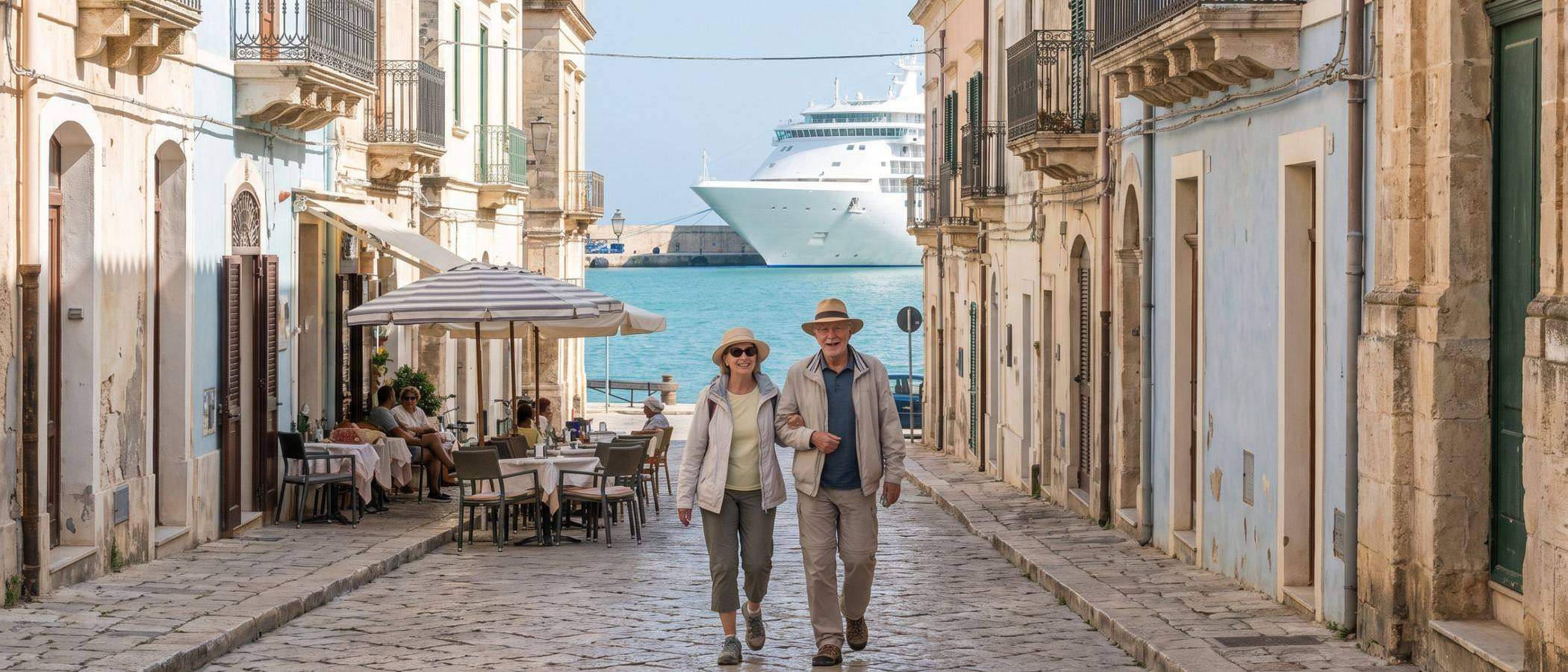
A cruise is one of the most comfortable ways to travel after 60: you unpack once, there are no daily transfers and you choose your own pace. Pick a mid-size ship, a cabin near the lifts in the middle of the ship and excursions with an easy activity level. Check travel insurance age limits and bring enough medication.
Why the format works well
- Unpack once. No repeated packing, transfers or hotel check-ins.
- Short distances. In many ports the ship docks close to the centre; restaurants, theatre and deck are a lift ride away.
- Your own pace. From a full programme of talks and classes to a quiet day with a book — nothing is compulsory.
- Medical care on board. Most ships have a medical centre with a doctor and nurses.
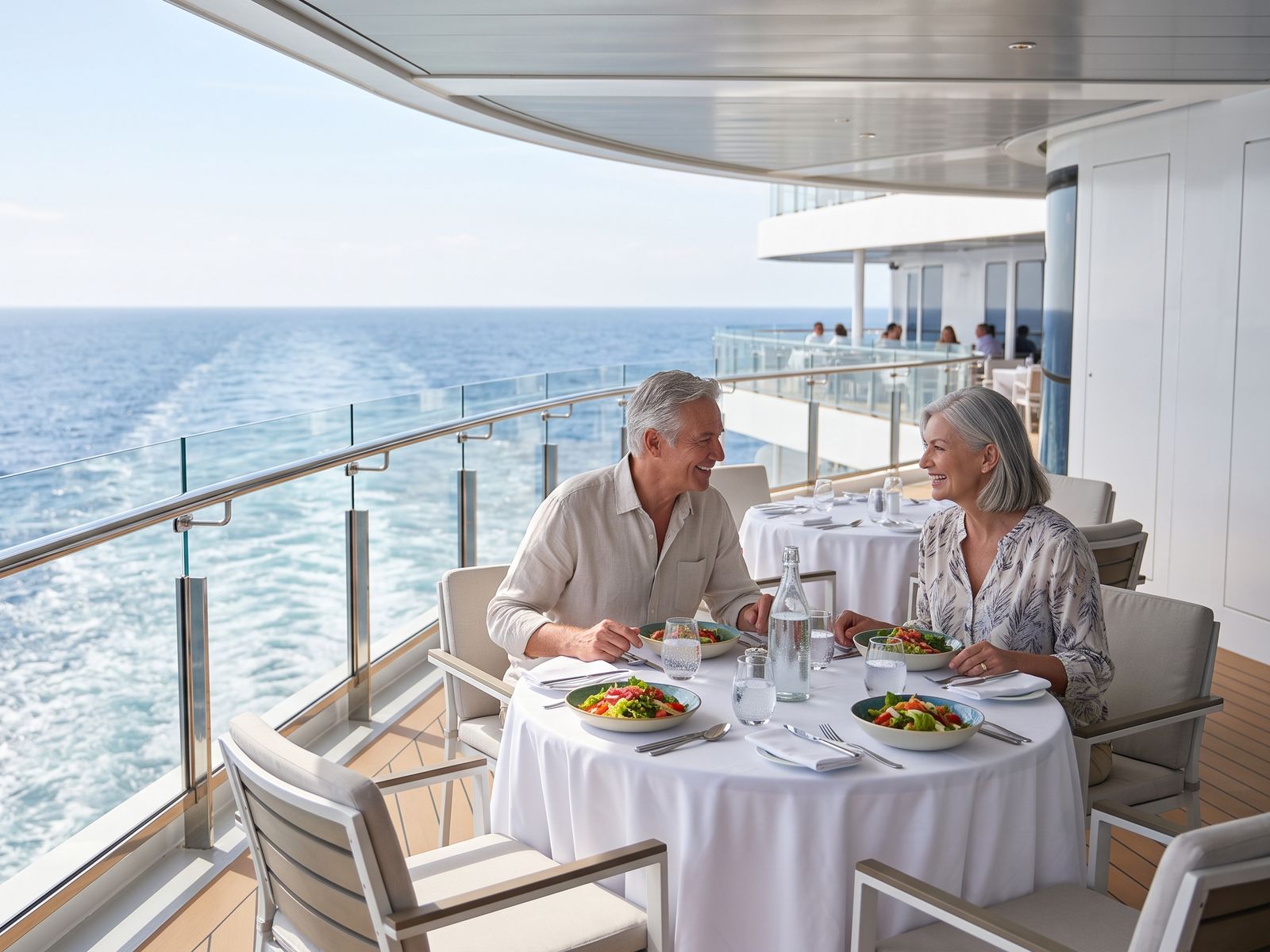
- Easy company. Dinner, quizzes and excursions make it easy to meet people — and just as easy to be on your own.
Choosing the ship
| Ship type | Good for | Keep in mind |
|---|---|---|
| Large ship | Lots of choice in restaurants and shows; very stable at sea | Long walks between areas, busy at embarkation, many families in school holidays |
| Mid-size ship | A balance of choice and short distances | Fewer big attractions — often not a drawback at all |
| Small or premium ship | A calm atmosphere, smaller ports, more personal service | Less entertainment in the evening; often a higher fare |
| River cruise | Calm water, a town almost every day, docking in the centre | Few facilities on board; no lifts on some older river ships |
More about the difference: river cruises in the club.
Choosing the cabin
- Middle of the ship, lower deck: the least movement at sea.
- Close to the lifts: fewer steps every day, especially on a large ship.
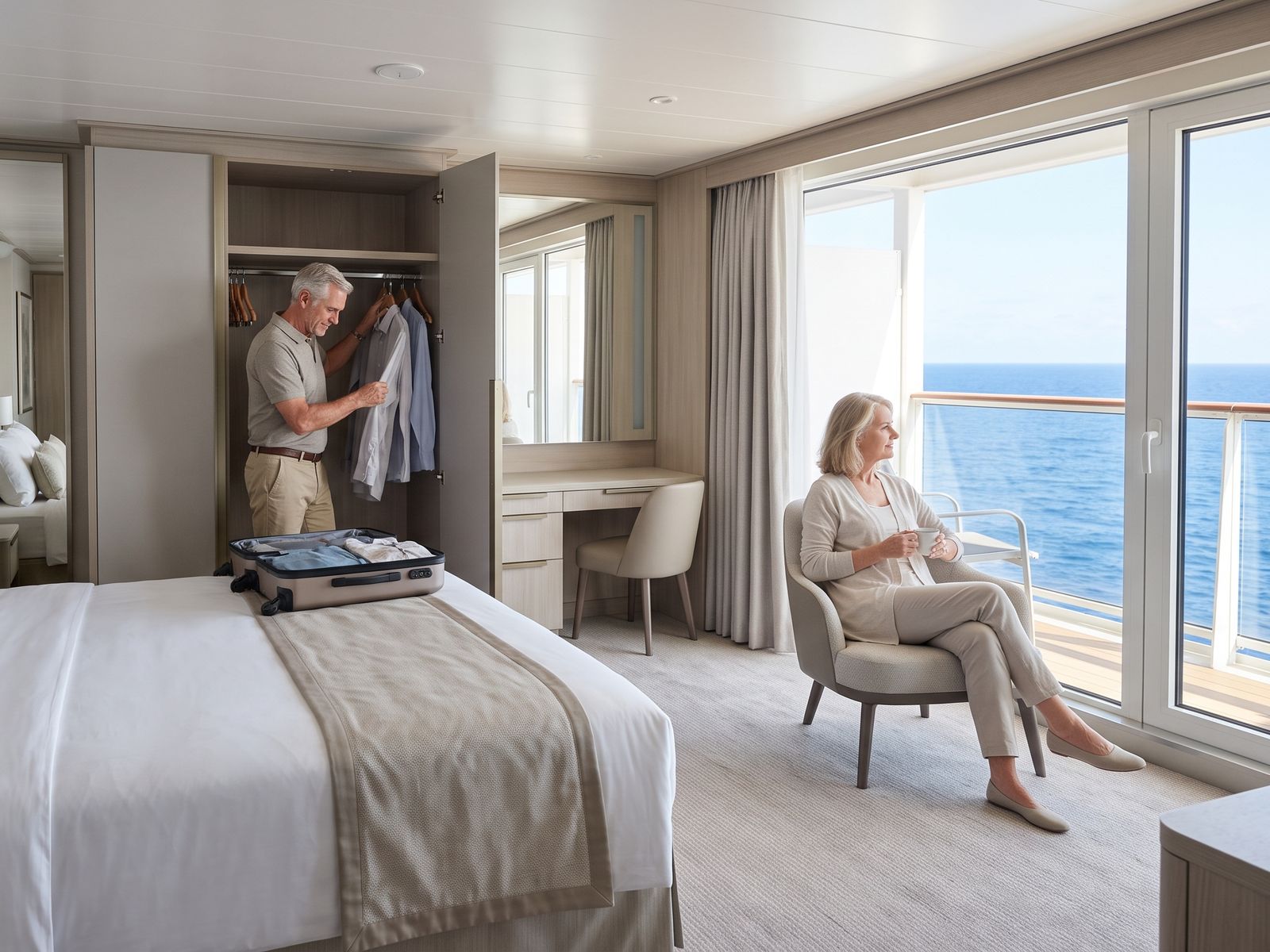
- A window or balcony: worth it on longer cruises and scenic routes.
- Beds and bathroom: ask for twin beds if you prefer them, and a shower without a high step if that matters.
- Accessible cabins exist on most large ships, in limited numbers — book early. See cruising with limited mobility.
More tips in how to choose a cabin.

Ports and excursions at a comfortable pace
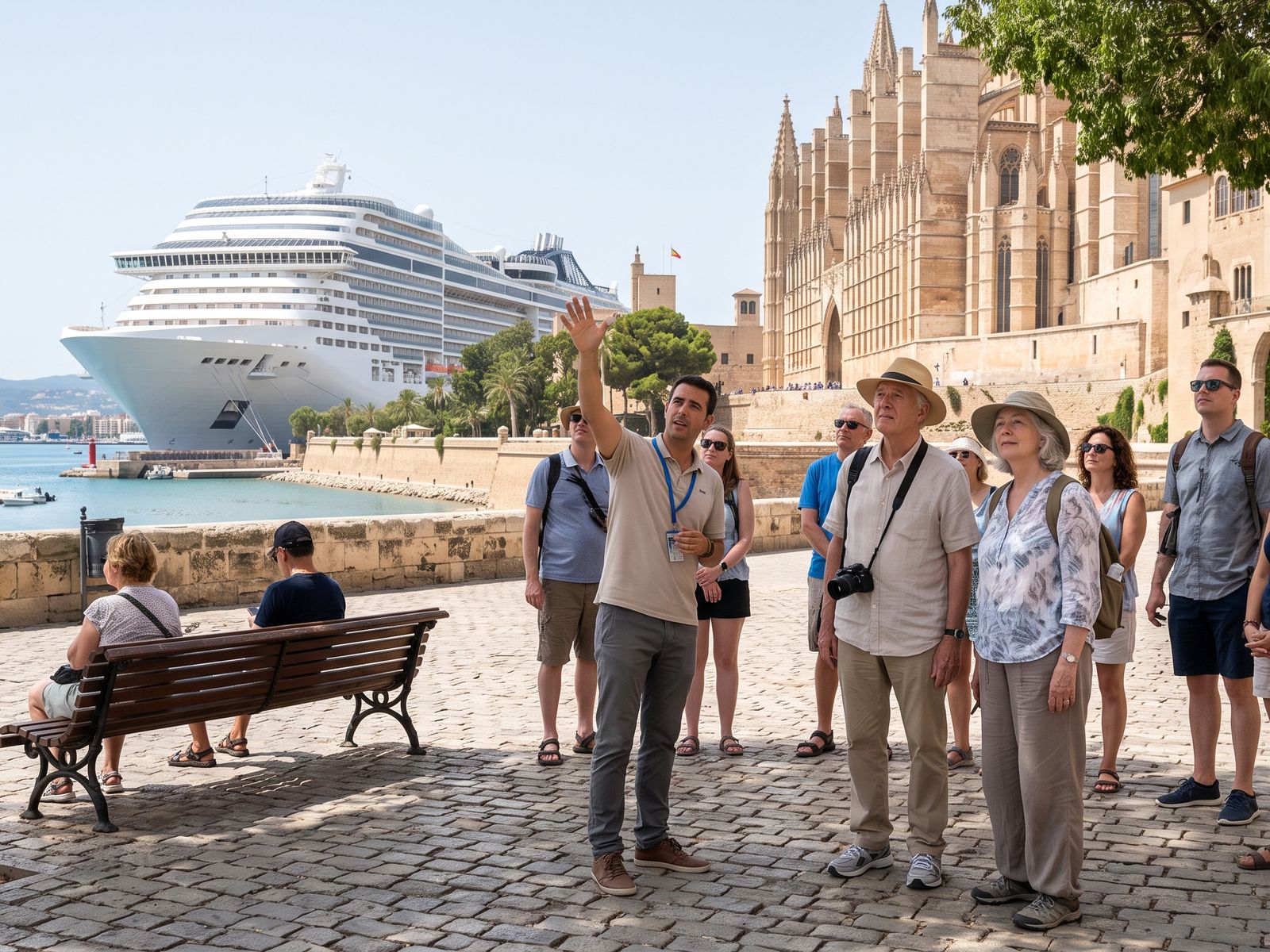
- Activity levels: cruise lines mark their excursions as easy, moderate or demanding. Easy usually means mostly by coach with short walks.
- Tender ports: where the ship anchors and you go ashore by small boat, the step on and off can be difficult with limited mobility, and in waves tenders may be cancelled.
- Hilly old towns — such as Valletta, Dubrovnik or Funchal — have steep streets and steps. A short tour or a taxi is often more pleasant than walking.
- Skipping a port is fine. A quiet day on a half-empty ship is one of the nicest days of a cruise.
Health, medication and insurance
- Medication: take enough for the whole trip plus a few days, in your hand luggage, with an English overview of your medicines from your pharmacy.
- Medical care on board is private and usually charged to your on-board account; public health insurance often does not cover it.
- Travel insurance: check medical cover, evacuation, pre-existing conditions and any age limits in your policy. See travel insurance for a cruise.
- Pace: warm destinations and long days ashore are tiring; plan rest days and drink enough water.
Ideas for your next trip
- Wintering at sea — 3 to 6 weeks of winter sun on board
- Cruising with grandchildren — cabin, kids' club and documents
- Cruising on your own — single cabins and how to meet people
- A cruise for a milestone — a retirement, an anniversary, a big birthday
- Cruising with elderly parents — if you are planning for your parents
Common questions
Is there an upper age limit for a cruise?
Cruise lines usually have no upper age limit. Travel insurance policies may have one, or extra conditions from a certain age — check yours before you book.
Which ship is best for older travellers?
Often a mid-size ship: enough choice on board, but shorter distances than on the largest ships. Outside school holidays, ships are calmer.
Is there a doctor on a cruise ship?
Most ships have a medical centre with a doctor and nurses. Treatment is usually charged separately, so medical cover in your travel insurance matters.
What if I find the excursions too tiring?
Choose excursions marked as easy, take a taxi or a short tour instead, or stay on board — a port day on a quiet ship is very relaxing.
Can I travel alone at 60+?
Yes, many people do. Some ships have single cabins, and get-togethers for solo travellers make it easy to meet people.
Planning ahead pays off
Trips at this stage of life are often planned well in advance — and through the club the way you pay depends on it. You pay either the member price (INsider Pricing), about 17% below the retail price, or with your Reward Points, which can cover up to half of the price of qualifying bookings; they do not add up in one booking. If you book 270 days or more before departure and have saved up enough points, points can cover up to 100%. Not every cruise line can be booked through the club: check the specific sailing in the club's search. How booking with points works →
General information, not medical or insurance advice; ships, cabins and excursion levels differ by cruise line. Percentages describe the club's rules and are indicative. Reislite is an independent information site run by partners, not a website of inCruises.