
In short
Copenhagen is a summer port for cruises to the Baltic, the Norwegian fjords and Iceland. The season runs from May to September, with most sailings in July and August and almost none in winter. It is about 1½ hours by air from the Netherlands, then around 40 minutes from the airport to the Oceankaj terminal.
Port at a glance
Copenhagen
- Where ships go
- Norwegian fjords · Baltic Sea
- Usual length
- 6–9 or 10–14 nights
- Terminal
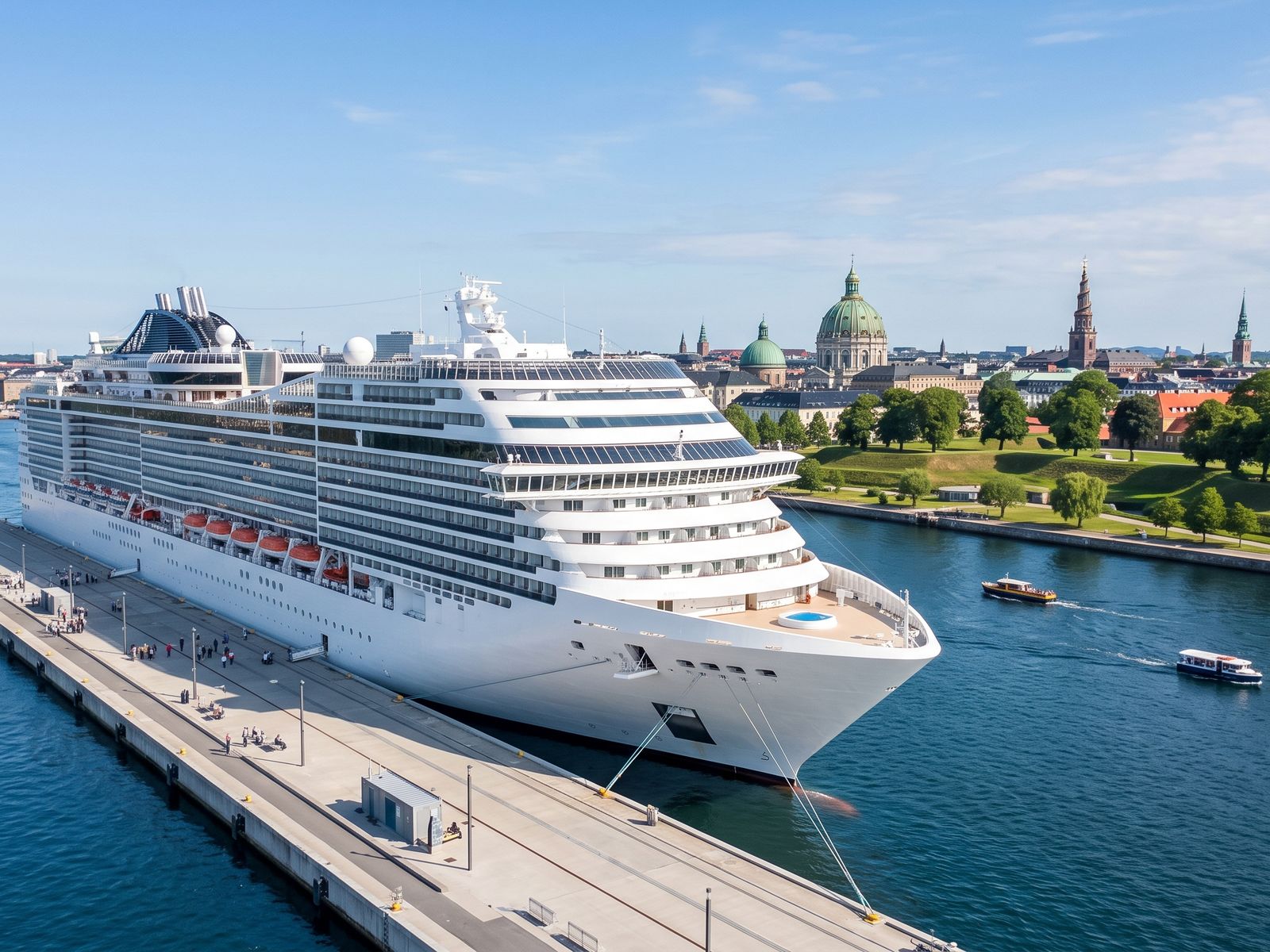
- Oceankaj in Nordhavn; sometimes Langelinie or Nordre Toldbod
- Getting there
- About 1½ hours by air; 11–12 hours by train
Good to know: big ships mostly sail from Oceankaj in Nordhavn, not from the quay by the Little Mermaid — from the centre you get there by bus and metro or by taxi.
Pick a month in the cruise finder →Why Copenhagen
- The whole Baltic from one quay. Stockholm, Tallinn, Helsinki and other Baltic capitals — the classic summer cruise starts right here.
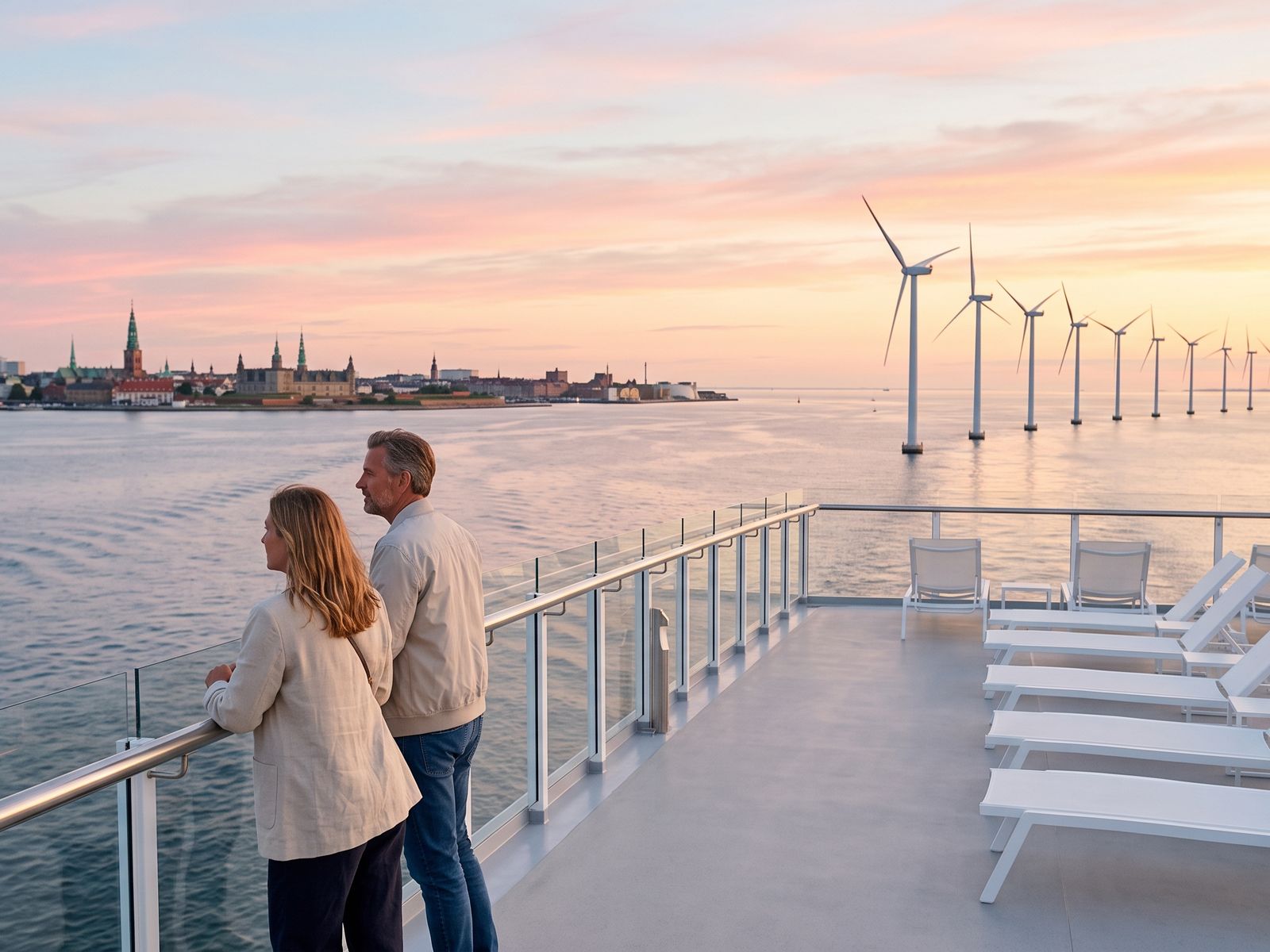
- Fjords and the far north. In summer ships also sail to the Norwegian fjords and on longer voyages to Iceland.
- Close to home. About an hour and a half by air from Amsterdam or Brussels, and the airport is 15 minutes from the centre by metro.
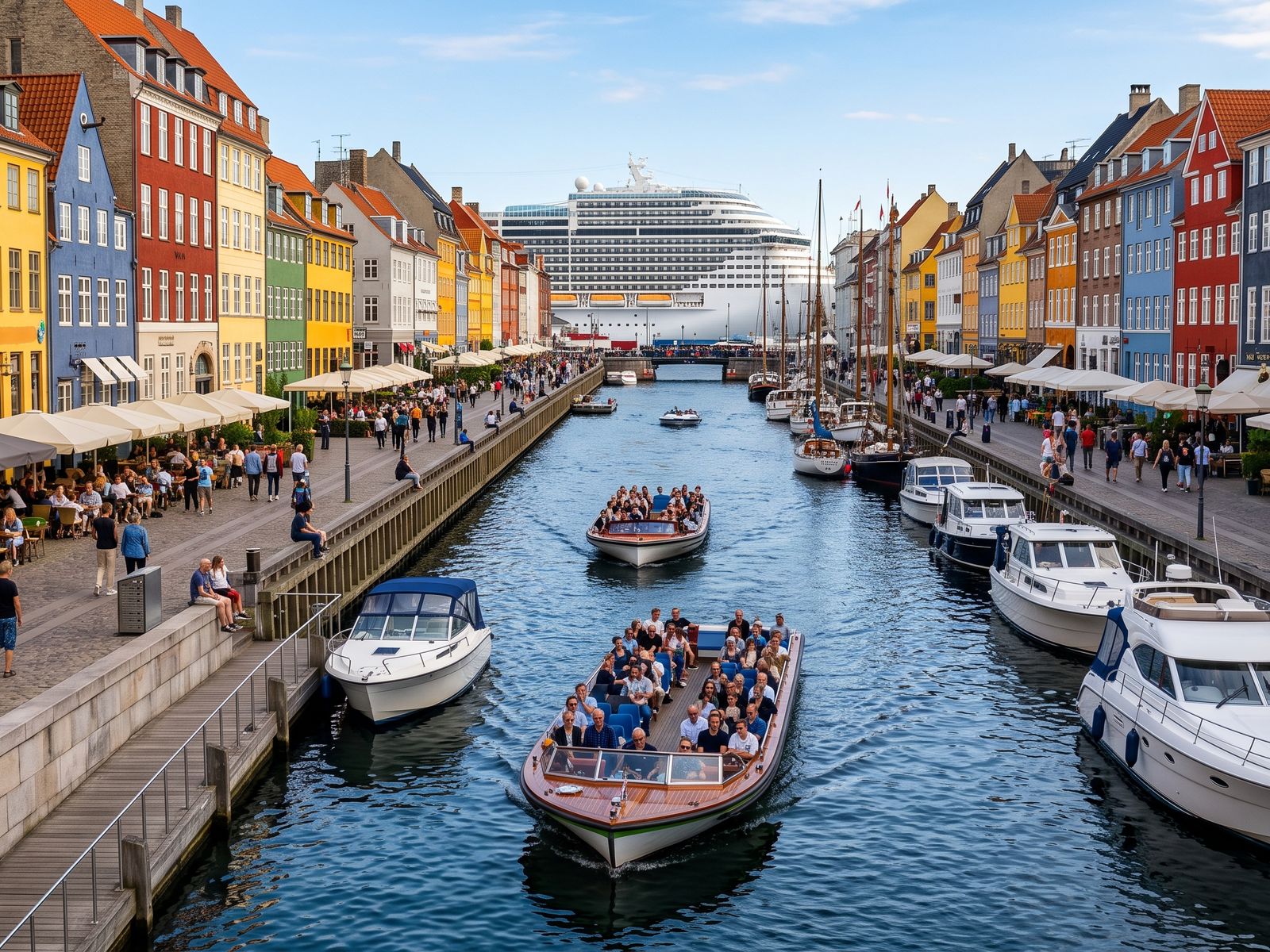
- A city worth an extra day. Nyhavn, the Little Mermaid, Amalienborg Palace and Tivoli Gardens — a day before your cruise is time well spent.
What sails from Copenhagen
Schedules change every year, but the overall picture is fairly stable. The main options:
| Route | Typical length | When | Good to know |
|---|---|---|---|
| Norwegian fjords | 7 nights, sometimes 10 to 14 | May to September, most often in July | The most frequent route: the fjords of western Norway, often with a call in Oslo |
| The Baltic | 7 to 14 nights | May to September | Stockholm, Tallinn, Helsinki and other Baltic ports — Copenhagen's classic |
| Iceland | 10 to 14 nights or longer | May to September, a few sailings | Plenty of sea days, sometimes with a call in the Faroe Islands |
| Northern Europe | 10 to 14 nights | Summer, mostly August | North Sea and British Isles ports, sometimes one way |
| Across the Atlantic | Two weeks or longer | Occasionally, July to September | The northern route to North America, often via Iceland; one way |
| Heading south | 9 to 14 nights | September and October | To the Mediterranean as ships move south for the winter; one way |
Based on cruise line schedules for 2026–2027. Ships, ports and dates change; always check the specific sailing.
Which season to choose
The Baltic and the first fjords
Long light days, cities in bloom and fewer crowds than in July. May is especially busy with Baltic sailings from Copenhagen.
Cruises in May →Peak season
The most sailings of the year: the fjords, the Baltic, Iceland and longer voyages. Warm, around 20 °C, but also school holidays — book early.
Cruises in July →Quieter and calmer
The crowds thin out, and there are still plenty of fjord and Baltic sailings. Late in the month the first voyages south appear.
Cruises in September →The last ships south
Few sailings: mostly one-way voyages to the Mediterranean. From November to March almost nothing leaves Copenhagen.
Cruises in October →Three quays — which is yours
Copenhagen has three cruise quays, and they are not next to each other. Your boarding documents name yours; the port also publishes its call schedule on cmport.com.
- Oceankaj (Nordhavn). The main terminal for big ships and cruise departures, in the new Nordhavn district in the north of the city, a few kilometres from the centre. Too far to walk from town: take bus 25 or 164 to Orientkaj metro station, then the M4 — about half an hour to Central Station. On cruise days the buses run every 10 to 20 minutes. There is an open-air car park for about 200 cars next to the terminal; it is seasonal and cannot be booked.
- Langelinie. A long quay by the Little Mermaid and the Kastellet fortress, close to the centre. Østerport station is about 15 minutes on foot, with metro and train connections. Ships calling at Copenhagen during their cruise most often berth here.
- Nordre Toldbod. A small quay by the old customs house, closest to the centre: Marmorkirken metro station is about 15 minutes on foot. Used by smaller ships. Neither Langelinie nor Nordre Toldbod has long-stay parking.
Getting to Copenhagen
- By plane. About an hour and a half from Amsterdam and Brussels. From the airport, the M2 metro or a train to Central Station takes about a quarter of an hour.
- By train. About 11 to 12 hours with a change in Hamburg: just over five hours to Hamburg, then about 4 hours 40 minutes to Copenhagen. Works well if you split the journey over two days with a night in Hamburg.
- By car. About 800 km and 9 to 10 hours of driving — through Germany and the Puttgarden–Rødby ferry, or over the bridges via Jutland. Oceankaj has a seasonal open-air car park where you pay on the spot.
Rather not fly?
If 11 to 12 hours on a train is too much, look at Kiel: ships sail from there to Norway too, and the train takes 6 to 7 hours. Closer still is Rotterdam, with week-long fjord cruises.
The night before: where to stay
If you fly in on the morning of boarding, any flight delay turns into a race. A night in Copenhagen is calmer — and the city is worth it.
Nordhavn and Østerbro
The new harbour district and the quiet residential area next to it. In the morning it is a few minutes by taxi, or by bus from Orientkaj metro station.
The centre and Nyhavn
The old town, canals and restaurants. Langelinie and Nordre Toldbod are within walking distance; Oceankaj is 20 to 30 minutes by taxi.
Vesterbro
Handy if you land late: trains from the airport run to Central Station, and the M4 goes from there to Orientkaj.
Christianshavn
Canals, boats and quiet streets across the harbour from the centre. The M2 runs straight from the airport; take a taxi to the terminals.
If you have half a day in Copenhagen
The centre is compact and easy to explore on foot. Everything below is close to the Langelinie and Nordre Toldbod quays, and 20 to 30 minutes by public transport from Oceankaj:
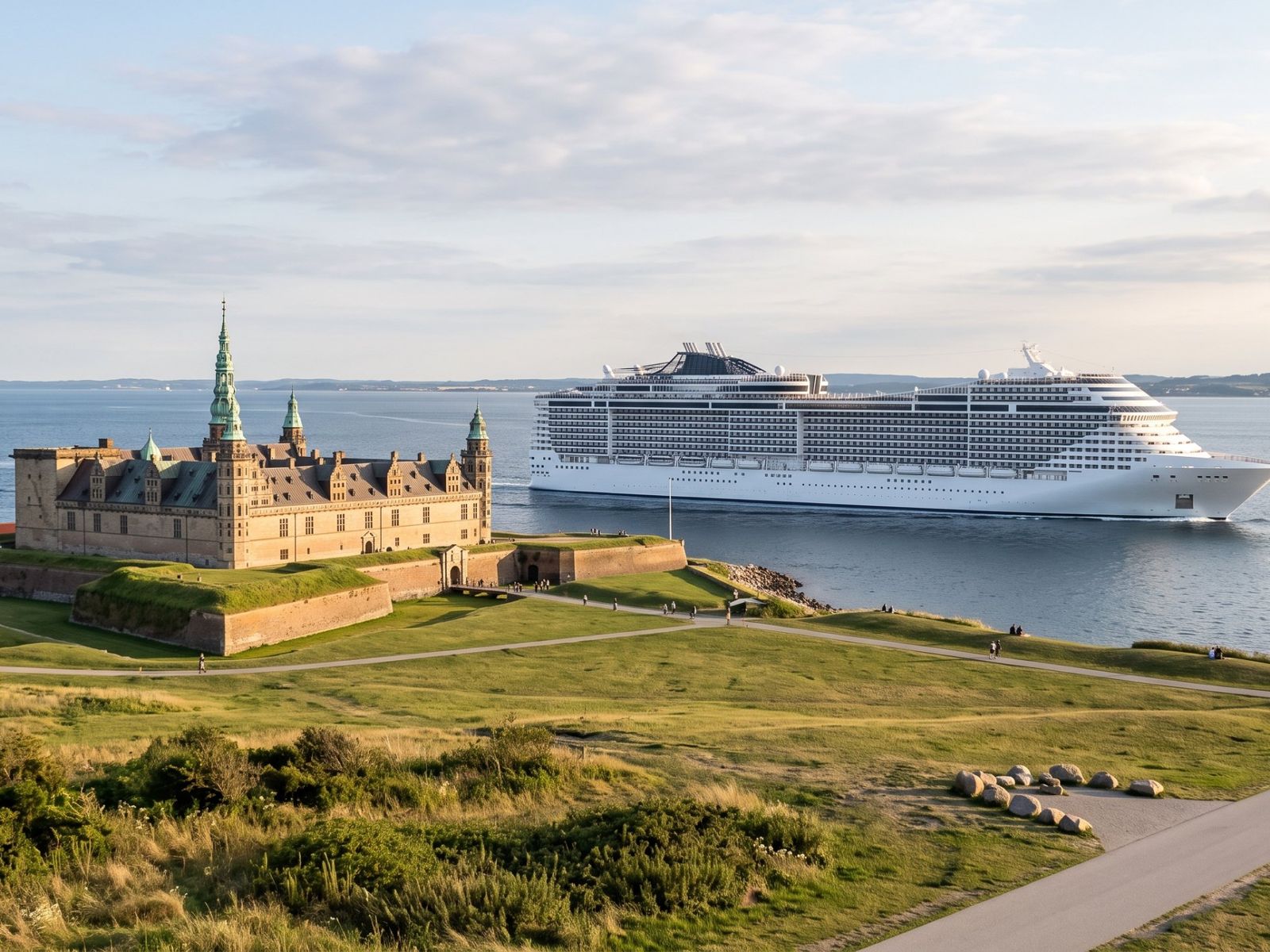
- The Little Mermaid and Kastellet. The famous statue on the Langelinie waterfront and a 17th-century star-shaped fortress with ramparts to walk along.
- Amalienborg and the Marble Church. Four royal palaces around one square, with the changing of the guard around noon, and the green-domed church right opposite.
- Nyhavn and the canals. Colourful houses along the old canal. Canal boat tours leave from here — about an hour, and you see the city from the water.
- Tivoli Gardens. The historic amusement park next to Central Station. It opens by season — in summer, for Halloween and before Christmas — so check the dates.
Coming home
Ships usually arrive early in the morning, and guests disembark in groups until about 9 or 10 am. It is about 40 minutes from Oceankaj to the airport, plus the security queue, so do not book a flight before early afternoon: leave a margin of several hours. If you are going home by train, the direct journey to the Netherlands takes all day.
Practical tips
- Check your boarding time. Cruise lines give each guest a time slot; arriving much earlier usually means waiting.
- Kroner, not euros. Denmark has its own currency, the Danish krone. Cards are accepted almost everywhere, so you hardly need cash.
- Mind the bikes. Copenhagen's cycle lanes are wide and very busy — do not stop on them with your suitcase.
- ID for everyone. Denmark, Norway, Sweden, Finland, Estonia and Iceland are in Schengen; the United Kingdom and North America have their own rules. If you do not hold a European passport, check the entry rules for every country on the route.
Common questions
Which cruises leave from Copenhagen?
In summer, the Norwegian fjords and the Baltic, usually 7 to 14 nights. Less often Iceland, Northern Europe and the Atlantic crossing, and in September and October one-way voyages to the Mediterranean. There are almost no sailings in winter.
Which terminal in Copenhagen does my ship leave from?
Big ships mostly sail from Oceankaj in the Nordhavn district, in the north of the city. The Langelinie quay by the Little Mermaid and Nordre Toldbod are closer to the centre. Your boarding documents name the exact terminal.
How do I get from the airport to the cruise terminal?
By taxi, about 40 minutes. By public transport it is also roughly 40 minutes: the M2 and M4 metro lines to Orientkaj, then bus 25 or 164 to Oceankaj. Many cruise lines also sell their own transfers.
How do I get from the Netherlands to Copenhagen?
Flying is easiest: about an hour and a half from Amsterdam. By train it takes 11 to 12 hours with a change in Hamburg, so it suits travellers happy to split the journey over two days.
Where should I stay before a cruise from Copenhagen?
Nordhavn and Østerbro are closest to Oceankaj. The centre and Nyhavn are best for exploring, and Vesterbro by Central Station suits late arrivals. From the centre it is 20 to 30 minutes to Oceankaj in the morning.
Are there cruises from Copenhagen in winter?
Hardly any: the season runs from May to September, with a few sailings in April and October. In winter, look at Hamburg, which has week-long cruises around Northern European ports all year round.
How the club fits in
Cruises from Copenhagen that are available in the club work on the same terms as any other route. You choose one way to pay per booking: the member price (INsider Pricing), roughly 17% below the listed price, or your Reward Points, which can cover up to half of the cruise price. They do not add up. To pay up to 100% with points, you need to have accumulated enough points and book 270 days or more before departure.
Not every cruise line can be booked through the club: check the specific sailing in the club's search, or ask us and we will tell you which dates from Copenhagen are available in your month.
How booking with points works →
Seasons and destinations are summarised from cruise line schedules for 2026–2027 and may change; check the current itinerary and terminal information before you travel. Percentages describe the club's rules and are indicative. Reislite is an independent information site run by partners, not a website of inCruises.