
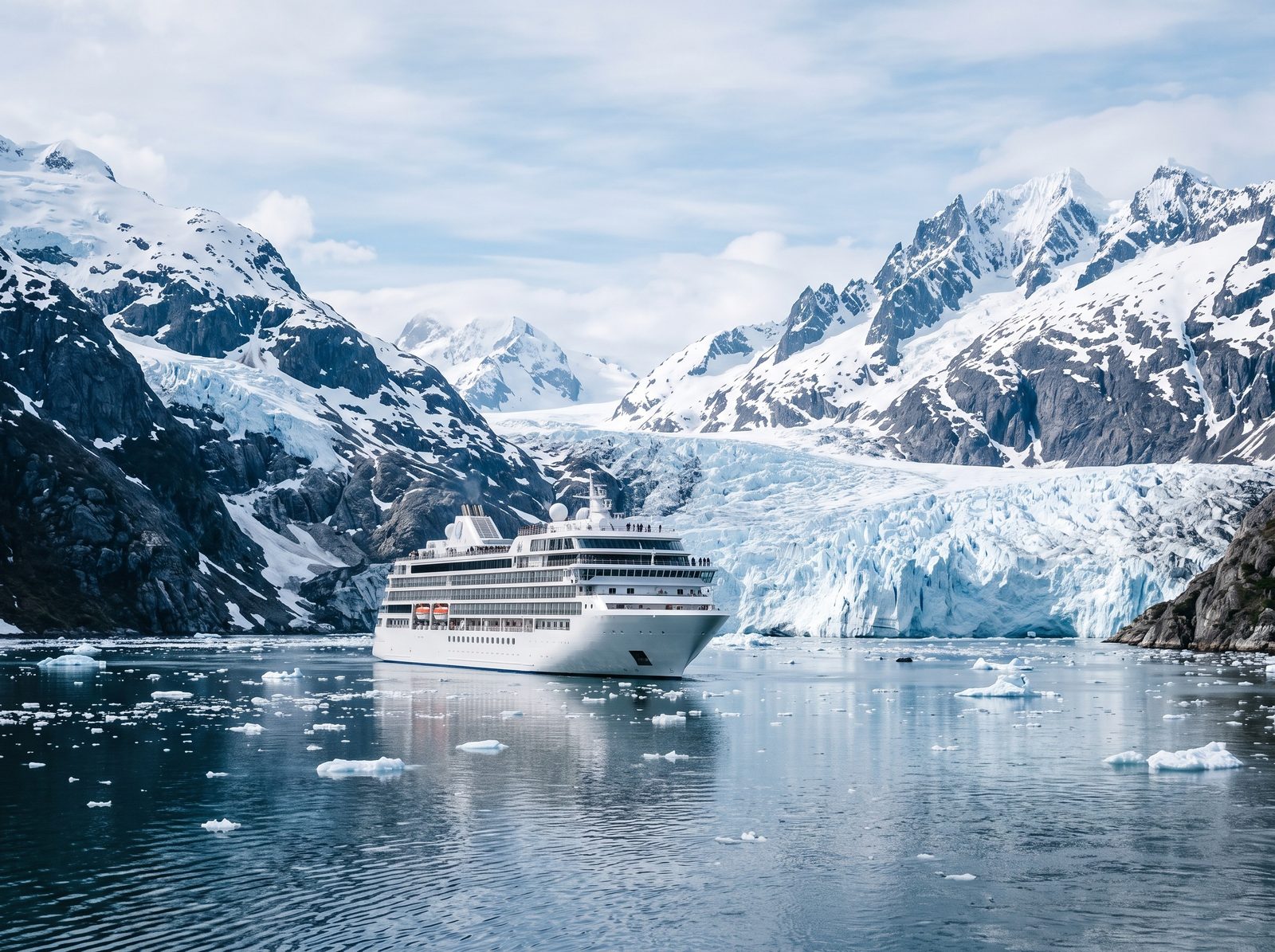
Not a beach cruise. Wind, glaciers and landscapes you will not forget — and a route that is hard to do any other way.
What Makes It Different
- Dramatic nature: glaciers, fjords, channels and sailing past Cape Horn
- Wildlife you may see: Magellanic penguins, sea lions, albatrosses and whales
- Places that are complicated to reach overland, one after another without changing hotel
- Often one way, from one ocean to the other: Buenos Aires to the coast of Chile, or the other way round
A Typical Itinerary
These cruises usually last about 14 nights and sail one way between Buenos Aires and Valparaíso or San Antonio (the ports for Santiago de Chile), or in the opposite direction. Some sail round trip from Buenos Aires. Here is what the route can look like. It is an illustration, not a specific sailing: the ports, their order and the days depend on the ship and the season.
- StartBuenos Aires Board and sail out along the River Plate.
- PortMontevideo The first stop, still in mild weather.
- At seaDays at sea Heading south along the Atlantic coast.
- PortPuerto Madryn Gateway to the Valdés Peninsula; in season, Magellanic penguins at Punta Tombo.
- At seaDays at sea The air turns cool and the landscape changes.
- PortUshuaia "The end of the world" in Tierra del Fuego, between mountains and the Beagle Channel.
- ScenicCape Horn Sailing past the cape, weather permitting.
- ScenicBeagle Channel and "Glacier Alley" Glaciers reaching almost down to the water, seen from the deck.
- PortPunta Arenas On the Strait of Magellan.
- ScenicChilean fjords Days among channels, islands and forests.
- PortPuerto Montt Gateway to Chile's lake district.
- EndValparaíso or San Antonio Disembark at the ports for Santiago de Chile.
Best Months to Go
The season is short and falls in the southern summer:
| Month | Weather | Pros | Cons |
|---|---|---|---|
| December | Cool and changeable, about 5–15 °C | Start of the season, very long days in the far south | The holiday weeks are much in demand |
| January | Cool, about 5–15 °C, windy | High summer down south, a good time for penguins | Local holiday season: book early |
| February | Cool, about 5–15 °C, windy | Still full season, long days | Rough seas are possible, as in the whole season |
| March | Cool and changeable, about 5–15 °C; colder towards the end of the month | End of season, fewer people | Shorter days, fewer sailings left |
Approximate daytime temperatures. The wind can be very strong and the weather can change several times in one day.
What to Pack
- A waterproof, windproof jacket
- Warm clothes to wear in layers
- A hat and gloves, also for time on deck
- Binoculars for wildlife and glaciers
- Comfortable shoes with a good grip for tenders and walks
- Something for seasickness — ask your pharmacist what suits you
- Sunscreen and sunglasses: the southern sun is strong even when it is cold
- Your passport, valid for both Argentina and Chile
Who It Is For — and Who It Is Not
A good fit if you
- are drawn to wild nature and huge landscapes
- want a once-in-a-lifetime route
- enjoy days at sea watching the scenery
- are interested in wildlife: penguins, seabirds and whales
- have about two weeks plus travel days, and like planning ahead
Probably not for you if you
- want beach, sun and pool
- get seasick easily and would rather not risk rough seas
- do not have two to three weeks free
- would rather return to the same port, without arranging flights to and from different countries
Frequently Asked Questions
When do Patagonia cruises run?
Roughly from December to March, during the southern summer. It is the only time the weather allows this route to be sailed regularly.
Is sailing past Cape Horn guaranteed?
No. Cape Horn and the glaciers depend on the weather and the sea, and the captain decides on the day. It is best to go knowing that.
How cold is it?
Cool and very changeable: about 5–15 °C with strong wind. With layers and a good waterproof jacket it is perfectly enjoyable, even on deck.
How do the flights work from Europe?
Usually as an open-jaw ticket: fly to Buenos Aires and home from Santiago, or the other way round. Add a buffer day at the start, because the cruise will not wait for a delayed flight.
Will I get seasick?
The sea can be rough, especially near Cape Horn. If you are sensitive to motion, bring something for seasickness and ask your pharmacist what suits you.
Part of a Bigger Season
Patagonia is one of three ways to spend the southern summer at sea. The others: a week along the Brazilian coast, or sailing there across the Atlantic in autumn.
South America cruise season guide →
Why Planning Ahead Pays Off Here
The season is short, and this is a trip most people prepare for months — not a last-minute decision. That works in your favour. Club terms are the same as on any route, and you choose one way to pay per booking: the member price (INsider Pricing) or your Reward Points — they do not combine in one booking. If you have accumulated enough points and book 270 days or more before departure, they can cover up to 100% of the cruise price.